Have a question? Call us Now
+91 9825072799
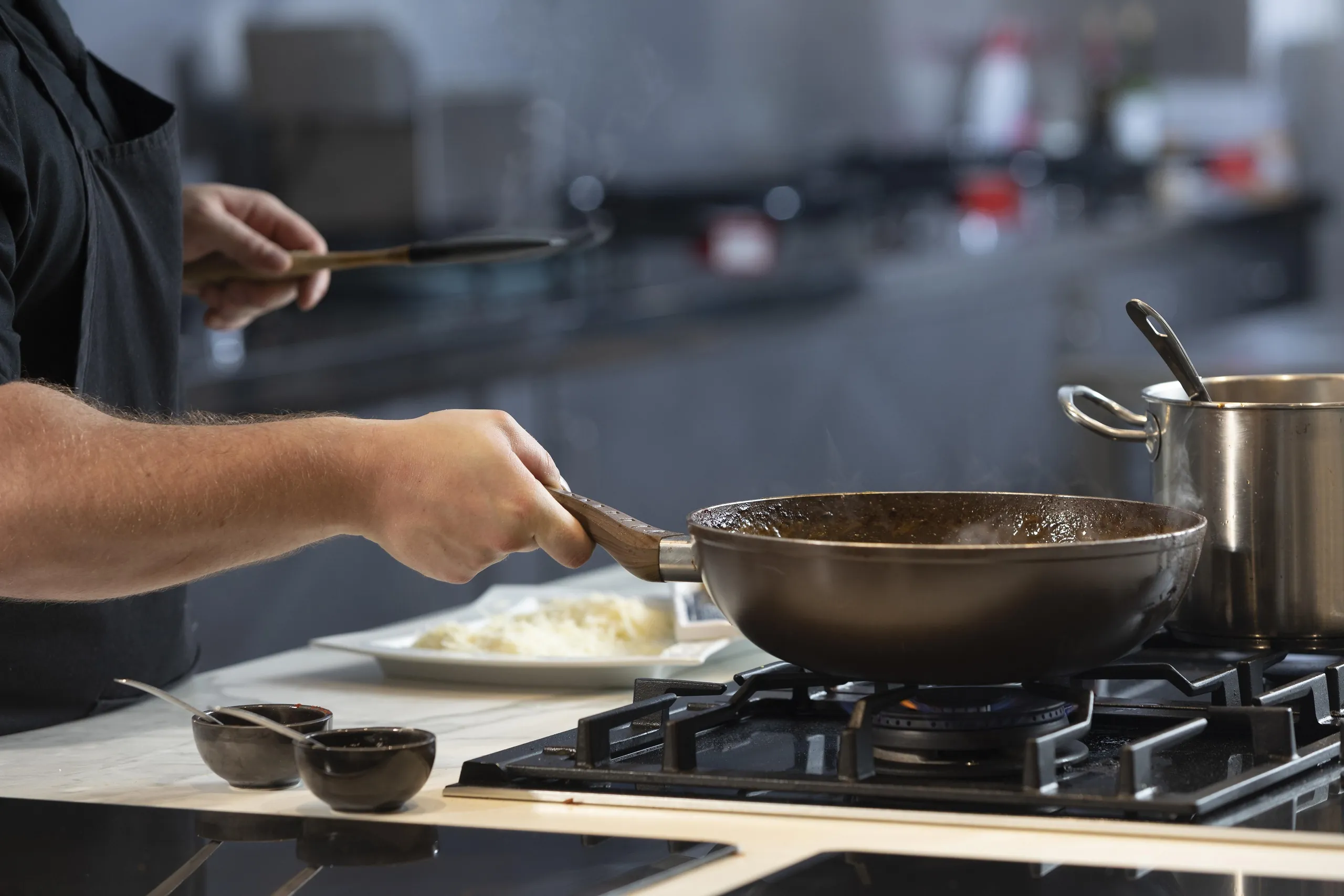
Your restaurant customers only see and taste the final dish. But it is the chef, restaurant staff, and the owner, who know how much efforts were required and how many operational challenges were faced while preparing it. Heavy equipment or appliance usage, limited workspace, multiple staff working around, cluttered kitchen assembly stations, fluctuating demands, demand for faster service, all while adhering to safety, hygiene and compliance standards, are some of the operational challenges faced in commercial kitchens.
Commercial cooking equipment can address these operational challenges by integrating automation, enhanced energy and water management, and providing faster, safer, and multi-functional capabilities. These innovations enable chef and restaurant staff to focus on providing improved food quality and services, rather than focusing on equipment handling and limitations.
This blog talks about the different operational challenges faced by traditional commercial kitchens and how modern commercial kitchen solutions help in resolving them.
The size of an average commercial kitchen is around 1000 square feet. Especially, the cloud kitchens and fast-food restaurants operate in limited spaces. Therefore, if the kitchen layout is not designed properly and space is not optimized then it can lead to staff congestion, increased time in food preparation, and a higher chance of accidents, especially during the heavy service hours.
Modern commercial cooking kitchen equipment can address these challenges by:
Such modern kitchen appliances can optimize floor spacing and encourage high production in the commercial kitchen.
The energy cost in commercial kitchens can be distributed across different equipment and appliances used in the kitchen. Let’s go through the table below to understand the energy consumption of different kitchen equipment:
| Equipment | Energy Usage |
|---|---|
| Refrigeration | 10-15% |
| Ovens, grillers, fryers, and steamers | 25-30% |
| Dishwasher | 5-10% |
| Kitchen Lighting | 10-15% |
| HVAC systems | 30-40% |
These appliances or equipment, when used for a longer time without proper maintenance, can result in inefficient heating or cooling systems, outdated burners, or poor insulation.
By using commercial kitchen equipment, you can address this problem through:
Example: Convection ovens in modular kitchens distribute heat evenly, which helps in baking the food item quickly, in reduced time and energy.
One of the main reasons why a customer visits the same restaurant again is because they get to taste the same food and quality on every visit. Thus, maintaining consistency in taste and high-quality food is essential in commercial kitchens.
To achieve this goal, modern commercial cooking equipment offers:
Special combi ovens today come integrated with recipes that are stored digitally, thus every time you cook that recipe using the combi oven, it will taste the same.
Most restaurants experience a surge in demand during peak dinner or lunch times. During these hours, any equipment failure or inefficiency in food preparation can result in a delay in service and increased wait times for the customers.
According to a survey, 7 out of 10 customers in quick service restaurants would not like to continue with their order if their wait time is more than 5 minutes.
Thus, to maintain speed in service even during the peak operational hours, commercial kitchen equipment offers:
That means modern commercial kitchen solutions allow you to provide food without compromising on the food quality.
For any professional or commercial kitchen, ensuring hygiene and food safety is a must if it wants to maintain compliance and drive in more customers.
According to a survey, 74% of the customers want restaurants to focus more on food hygiene; moreover, 75% trust FSA for food safety and accuracy in labelling.
Here are some of the food safety and hygiene measures that commercial cooking equipment features:
In another survey, 70% of the customers stated that they are willing to pay a high cost for the restaurant or a commercial kitchen that ensures safe and clean food practices.
Although frequent equipment downtown can cause delays in cooking, it can also impact restaurants in terms of revenue. According to a study, around 70% of the unplanned downtime in commercial kitchens is caused by equipment failures. Similarly, in a survey, 24% of the respondents experienced an estimated revenue loss of $1001-$5000/hour of disruption.
Traditional commercial kitchens often faced equipment breakdowns because of:
Commercial cooking equipment can help minimize frequent equipment breakdowns by integrating features like:
Several modern commercial kitchen equipment items also come with features that send notifications about the maintenance requirements.
Dealing with food wastage is a major challenge for commercial kitchens. To address this, commercial cooking equipment support strategies that include:
Apart from reduction in food wastage and financial savings, commercial kitchen equipment helps in achieving sustainability goals.
Commercial kitchens and restaurants often deal with frequent staff turnover, which makes continuous training a significant challenge.
Advanced commercial cooking equipment is designed with smart features and user-friendly technologies that are easier to learn and use.
Thus, investing in commercial kitchen equipment can dramatically boost productivity and reduce operational impact.
With traditional kitchens that have fixed equipment and appliances that perform a single function, restaurants often struggle to provide multiple cuisines and expand the menu. Modern commercial kitchen solutions come integrated with appliances that offer multiple functions and can be used to create several dishes.
Thus, with commercial cooking equipment, you get the flexibility to extend your menu without any worry.
Commercial kitchens are prone to hazards due to:
On the other hand, commercial cooking equipment offers:
Such features can reduce the risk of accidents in the kitchen.
Investing in commercial kitchen equipment can be costly as it might require you to invest a high cost at the start. However, investing in modern commercial equipment can provide benefits in the long-term by reducing operational costs and increasing return on investment (ROI):
According to the latest statistics, commercial kitchens using certified and modern energy-saving equipment can achieve cost savings of about 4300 annually.
Operational challenges such as slow service, inconsistent food quality, limited menu, food wastage and staff training in commercial kitchens can impact everyday kitchen workflows, in terms of everyday operations, safety, cost, and ROI.
Modern commercial cooking equipment provides a practical, modern, and efficient solution to handle these challenges with energy-efficient appliances, smart monitoring technologies, large refrigeration units that increase the food shelf life and innovative waste management that also drive sustainability initiatives, etc.
Thus, over time, your investment in commercial kitchen equipment can help you achieve measurable returns, enhanced resource management, and improved food service quality.
Dealing with operational bottlenecks in your commercial kitchen? Partner with Riddhi Display to modernize your traditional kitchen with modern commercial kitchen solutions that can increase customer satisfaction and provide you with a competitive advantage.
1. What is commercial cooking equipment?
The commercial cooking equipment is the professional appliances that are designed to work in large commercial kitchens such as restaurants, hotels, or catering facilities.
2. Can commercial kitchen equipment provide energy efficiency?
Yes, most commercial kitchen equipment is designed with optimized heating solutions, insulated systems, and intelligent sensors that reduce energy wastage.
3. How frequently should commercial kitchen equipment be maintained?
Routine maintenance should be performed every 3-6 months. Proper maintenance should be performed as suggested by the manufacturer.
Copyright by Riddhi Display. All rights reserved.
Powered by: Icecube Digital