Have a question? Call us Now
+91 9825072799
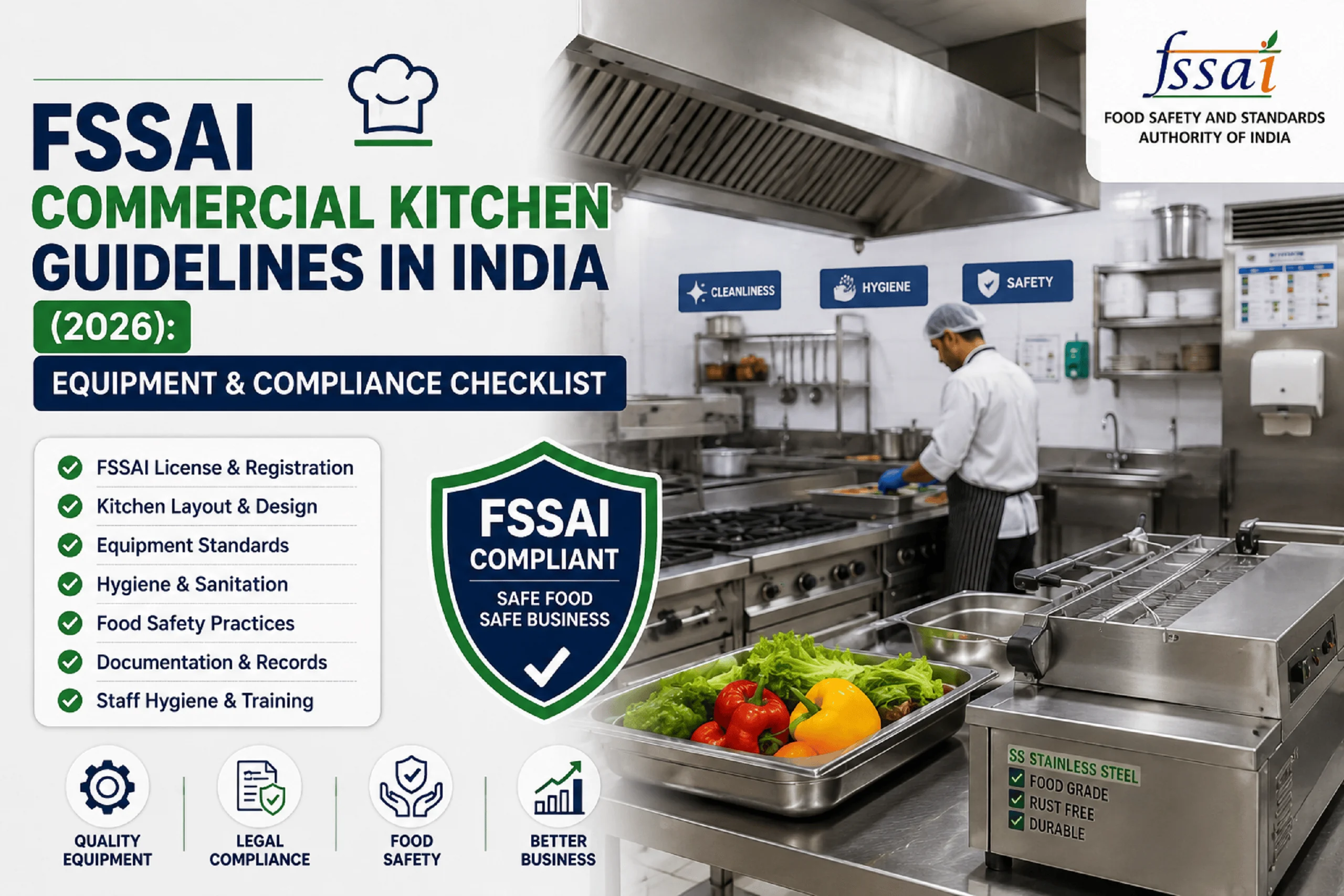
When you are starting or expanding a restaurant, hotel, café or a cloud kitchen in India, the first thing you need to take care of is FSSAI compliance. It is illegal to run any food business without following FSSAI requirements, and the changes to the regulations that were implemented in 2026 should also be noted by any food business owner before purchasing commercial kitchen equipment.
This guide clarifies the most recent FSSAI standards for the commercial kitchen, which involve tools, kitchen design, cleanliness and a practical compliance checklist. Remember, successful FSSAI compliance doesn’t start with paperwork, it starts with choosing the right commercial kitchen equipment and maintaining a clean, well-organized kitchen.
FSSAI regulates every food business under the FSS Act, 2006, and Schedule 4 spells out the hygiene and equipment standards you need to meet, down to your worktable material and freezer temperature. Depending on turnover, you’ll need a Basic, State, or Central Licence, displayed on-site and on every bill. Since March 2026, licences are valid for good though your kitchen still has to earn that compliance daily.
This is usually where inspections go wrong. FSSAI cares a lot about what your equipment is made of; a surface can look spotless and still harbour bacteria.
Get your restaurant kitchen equipment right the first time, and you skip the expensive scramble to replace non-compliant fittings right before an inspection.
FSSAI also looks at how your kitchen is built. Walls and ceilings should be smooth and light-coloured, floors non-slippery and sloped for drainage, with separate zones for raw prep, cooking, and cooked food. Every cooking station needs a chimney with proper suction.
A well-sized exhaust hood handles the smoke and heat, and it’s usually the first thing a Food Safety Officer checks.
Temperature control matters at every stage. Keep refrigerators between 0–4°C and freezers well below that, store raw and cooked food separately in covered, labelled containers, and never let containers sit directly on the floor 15 cm clearance minimum.
Solid refrigeration equipment cuts spoilage and keeps your inventory audit-ready one of the easiest compliance wins out there.
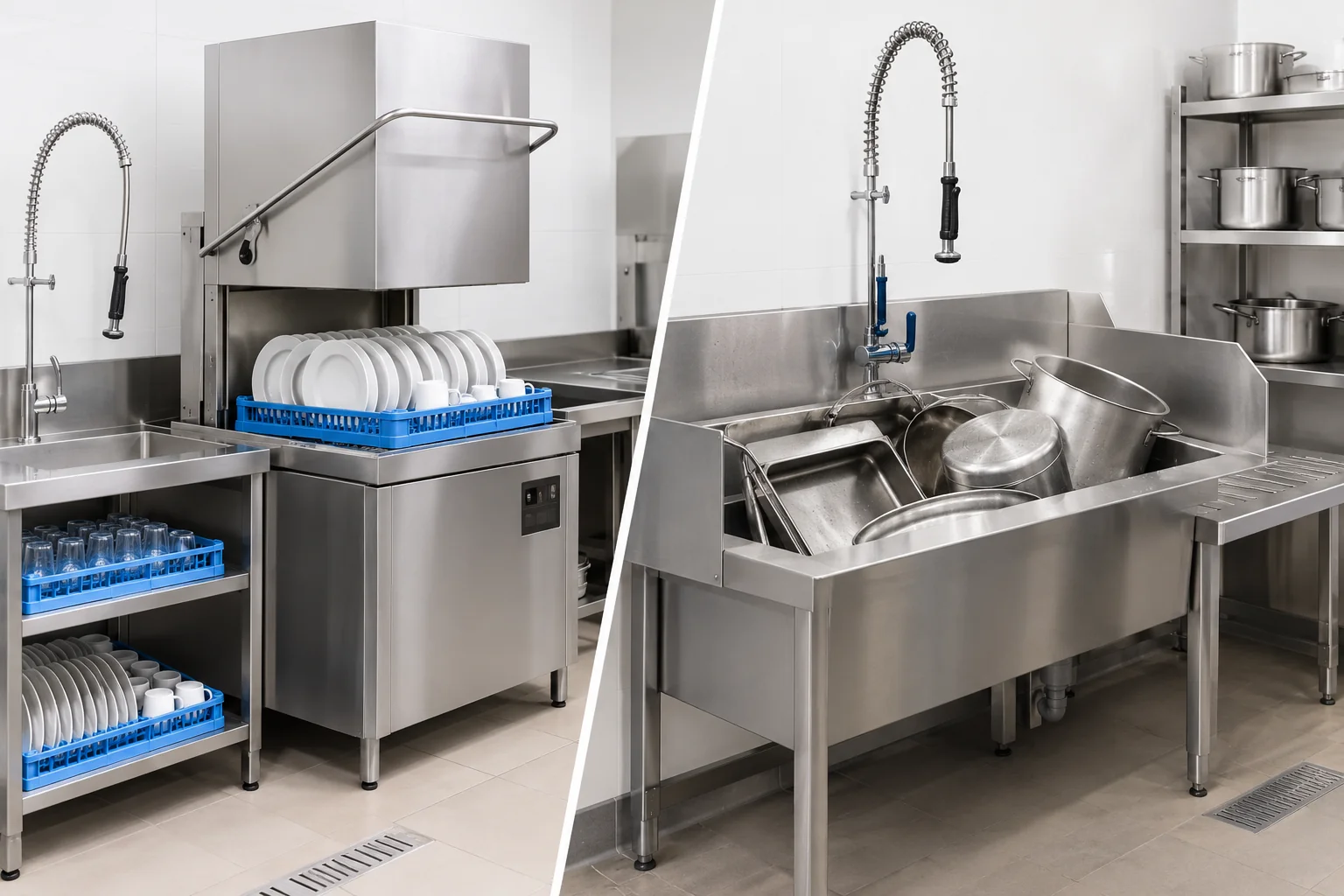
This is the last checkpoint before food reaches a plate, so FSSAI doesn’t leave much room here.
Good dish wash and pot wash equipment built for these standards saves labour and keeps every cycle compliant.
Licences issued on or after 1 April 2026 now carry perpetual validity, so renewals are off your plate. Turnover thresholds for Basic, State, and Central licences have shifted, which might move you into a different category. Street vendors registered under the Street Vendors Act are now automatically deemed FSSAI-registered, and inspections have moved to a risk-based model. One thing hasn’t changed: a lighter licence category never means lighter safety standards.
Most guides stop at explaining the rules that’s where owners get stuck, turning regulation into an actual kitchen. With over 35 years fabricating stainless-steel kitchens across India, we build commercial kitchen equipment around FSSAI norms from the design stage.
Our commercial kitchen consulting team works with owners on layout planning so compliance is baked in before the first order goes out. Take a look at our restaurant kitchen equipment and hotel kitchen equipment ranges to see what an FSSAI-ready kitchen looks like.
These heading changes are more SEO-friendly because they naturally include keywords that Indian users commonly search for, such as FSSAI commercial kitchen guidelines, commercial kitchen equipment, FSSAI kitchen layout, refrigeration equipment, compliance checklist, and FSSAI-compliant commercial kitchen, while preserving your original content.
The first step towards FSSAI compliance is to have the right setup in the kitchen. Whether it’s food grade equipment or good hygiene and layout, the basics are essential to staying compliant and making inspections much easier.
We at Riddhi Display, create and produce commercial kitchen equipment to FSSAI norms. We have more than 35 years of experience and assist restaurants, hotels, cloud kitchens and bakeries in designing effective, compliant kitchens ready for daily use.
1. Is an FSSAI licence mandatory for every commercial kitchen?
Yes restaurants, hotels, cloud kitchens, and caterers all need a valid FSSAI registration or licence before selling food, no matter how small.
2. What material does FSSAI want for kitchen equipment?
Non-toxic, non-absorbent, rust-free surfaces food-grade stainless steel, SS304 or above, is the standard everyone builds to.
3. What actually changed in FSSAI rules this year?
Perpetual licence validity, revised turnover thresholds, automatic street-vendor registration, and risk-based inspections.
4. How can Riddhi Display help me get FSSAI-ready?
We design and fabricate compliant kitchen equipment and layouts from scratch, backed by 35+ years of experience and a dedicated consulting team.
Copyright by Riddhi Display. All rights reserved.
Powered by: Icecube Digital