

Have a question? Call us Now
+91 9825072799
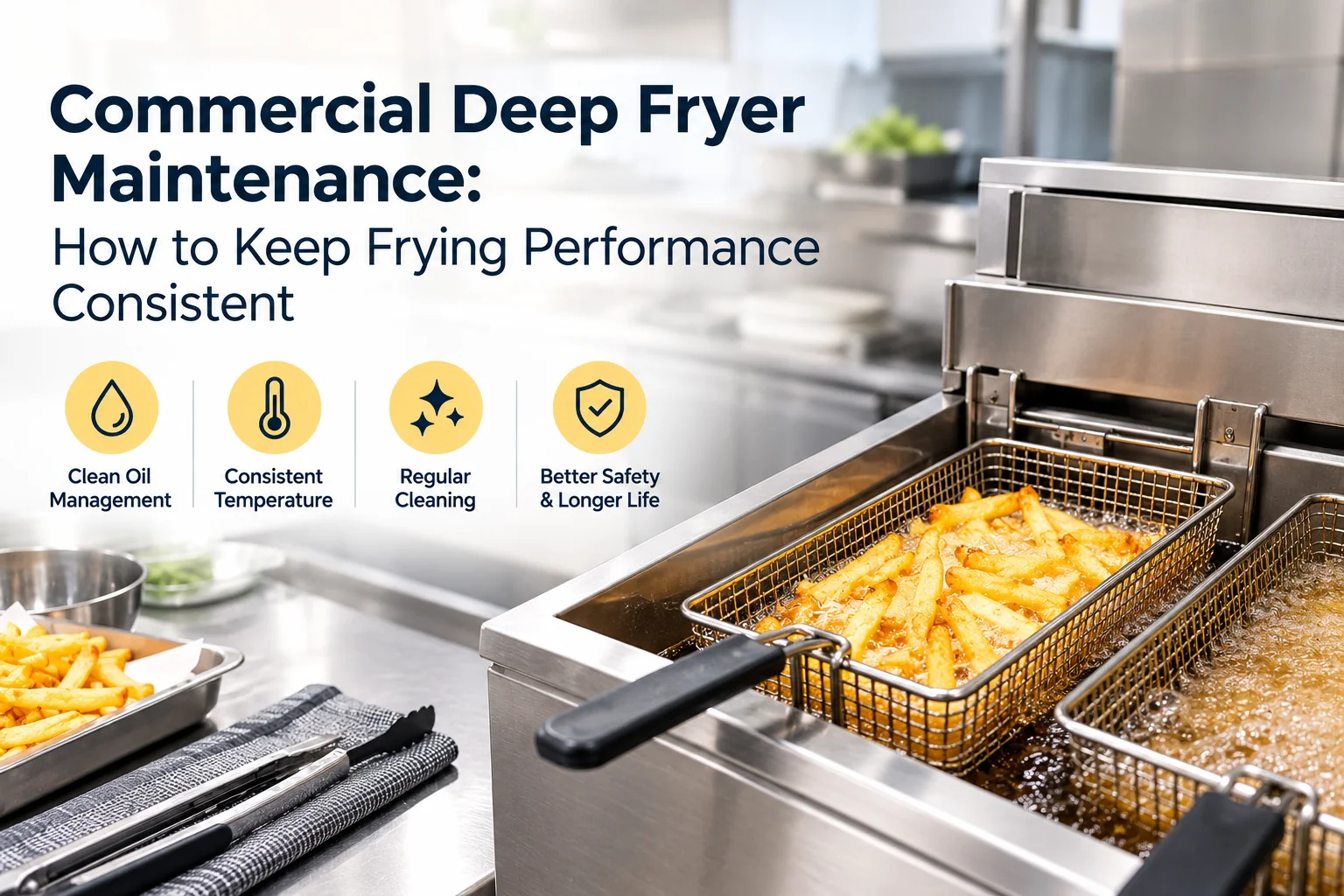
A commercial deep fryer that’s looked after will give you the same crisp, golden chips on the thousandth basket as on the first. One that’s been ignored won’t. The fries come out limp, the batter goes dark too early, and somebody’s onion rings taste like fish. Customers spot it fast, usually before the kitchen does.
The cause is rarely one big failure. It’s four small areas that slip: the oil, the temperature, the cleaning, and safe habits at the station. This guide covers each one, with how often to check and why it matters. It applies whether you run a single vat or a twin deep fryer and helps keep your deep fryer machine working consistently.
The short checklist
Nobody arrives one morning to find the fryer ruined. It slides. Breakdown compounds build up in the oil. Carbon bakes onto the heating elements. The thermostat drifts a few degrees. On any single day you’d never notice, but after a few weeks the colour, crunch and taste of your food have all moved. A quick routine catches that early and helps extend the working life of your commercial deep fryer.
Filter at least once a day, and after every service if you’re doing high volume. Between batches, skim out the loose crumbs. Burnt bits left floating in the oil break it down faster and pass a bitter taste to the next load.
Deciding when to change oil is where most kitchens go wrong. Skip the fixed schedule and look at the oil instead. Dark colour, heavy foaming, smoke at normal frying temperature, a sharp smell, or food that tastes greasy all mean it’s finished. If you want a number, use a total polar material (TPM) meter. Many guidelines set the limit around 24 to 27%, but your oil supplier may quote something different for their product, so ask them.
Some small habits that stretch oil life:
Most commercial frying runs between 325°F and 375°F (160 to 190°C). Too cool and food soaks up oil. Too hot and the outside burns while the middle stays raw.
Once a month, hold a separate probe thermometer in the oil and compare it to the display. If they’re more than 5°F (3°C) apart, recalibrate. Day to day, wait until the oil reaches the set temperature before you start. Don’t overload the basket, because a heap of cold food knocks the temperature down and the oil is slow to recover. Wipe the sensors too. Carbon on the probes and elements gives false readings and slows heating. Regular checks help your deep fryer machine maintain consistent frying temperatures and food quality.
This works in most kitchens:
Daily: Filter the oil, wash the baskets, empty the crumb tray, wipe the outside.
Weekly: Boil out the vat with fryer cleaner and scrub off carbon.
Monthly: Check gaskets, hoses and wiring. On gas models, look at the burners and flue.
For a boil-out, let the oil cool and drain it into an approved container. Fill the vat with water and fryer cleaner, then heat it as the manufacturer says. Scrub the walls and elements and rinse well. Then comes the step people rush: dry everything completely before fresh oil goes in. Even a little water left behind will spit hard once the oil heats.
Hot oil is unforgiving, so these habits need to be automatic.
| Problem | Likely Cause | Fix |
|---|---|---|
| Greasy Food | Cool oil, overloaded basket, old oil | Check temperature, fry smaller batches, test the oil |
| Burnt Surface | Oil too hot, crumbs in the vat | Recalibrate, filter the oil |
| Foaming | Water in the vat, old oil | Dry the vat, change the oil |
| Off Flavours | Old oil, flavours carrying over | Change the oil, fry fish separately |
For a busy kitchen, usually yes. Two independent vats mean you can fry at different temperatures and keep fish away from everything else. You can also filter or clean one side while the other keeps working. On a packed Saturday night that flexibility matters, and it makes maintenance much easier to schedule. Choosing a commercial deep fryer with two separate vats can also help kitchens manage different menu requirements without interrupting service.
A fryer doesn’t need much to stay in good shape. It needs the same few things done regularly: filtered oil, a temperature you’ve actually checked, a vat that gets scrubbed and dried, and a team that respects hot fat. None of it is hard. The trouble is that it’s easy to skip when service is heavy, and that’s exactly when the damage starts.
Pick one habit and make it non-negotiable this week, then add the next. Within a month you’ll notice the difference in your food, your oil bills and the number of repair calls. If your current fryer is holding you back, Riddhi Display can help. Have a look at our range of commercial deep fryers, including single-vat and twin deep fryer models, or get in touch and our team will help you pick the right deep fryer machine for your kitchen.
Copyright by Riddhi Display. All rights reserved.
Powered by: Icecube Digital