Have a question? Call us Now
+91 9825072799
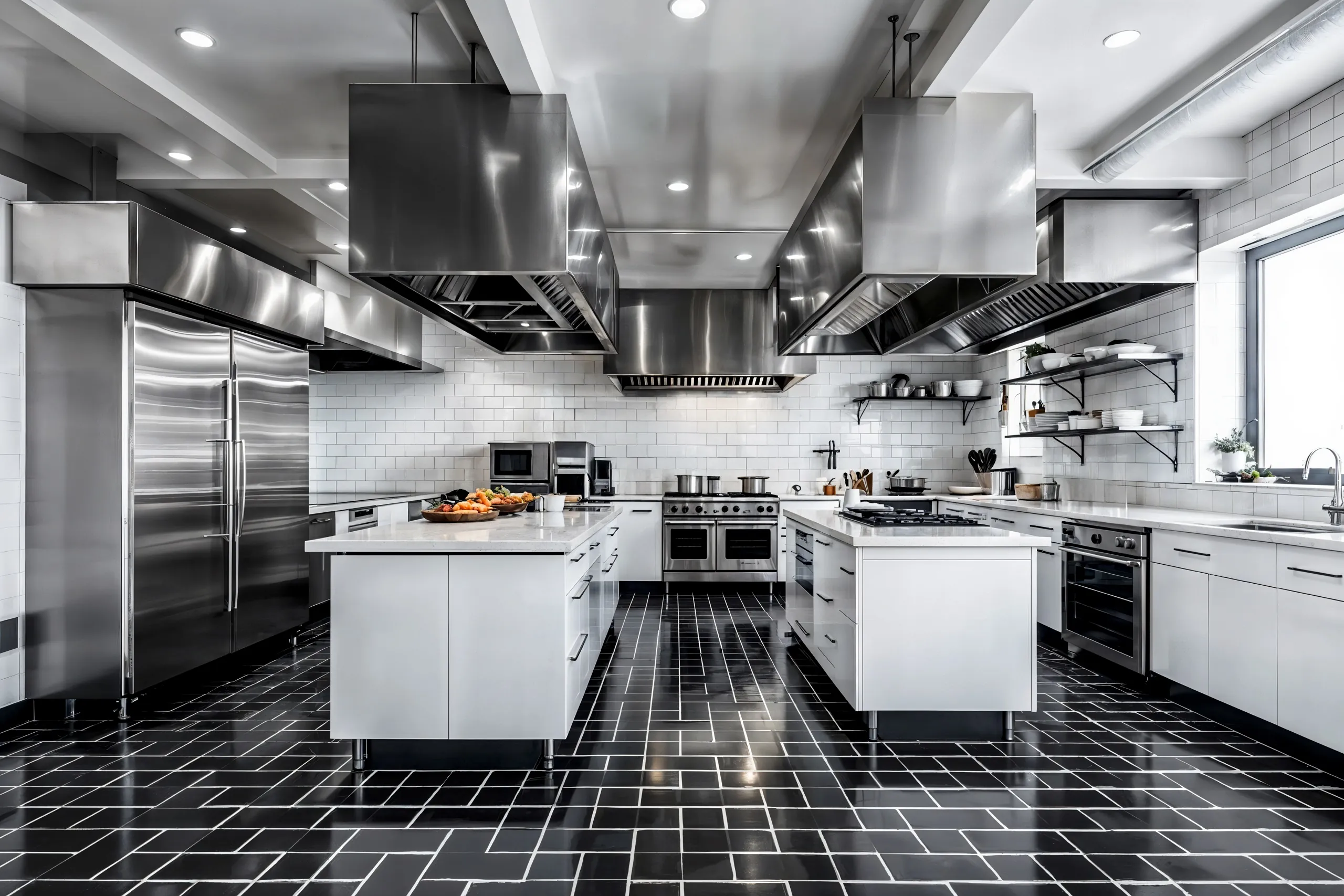
Every beautifully prepared meal is the result of heat, smoke, oil vapors, and steam from high flames, frying, and grilling, and of course, the pressure of constant cooking. This energy creates a problem in the kitchen when there is no appropriate exhaust ventilation and capture system.
Your kitchen can become a powerhouse with the correct system. Restaurant exhaust systems and hoods that are expertly designed, manufactured, and installed are essential because they use cutting-edge technology in a way that consistently meets performance, safety, and efficiency regulations.
So, let’s examine the specific reasons your restaurant needs to invest in a suitable kitchen exhaust and ventilation system.
A commercial kitchen must have an exhaust hood, range hood, or ventilation hood, as it removes heat, smoke, oil, and aromas produced during cooking and ensures a secure and comfortable working environment.
The exhaust hood is installed above the cooking equipment. It is connected to ductwork and an exhaust fan that captures and removes airborne contaminants. Filters inside the hood trap grease before the air is vented outside. This stops them from spreading throughout the restaurant and the kitchen. Maintaining air quality, avoiding fire threats, and adhering to health and safety laws depend largely on proper ventilation.
Undoubtedly, Indian restaurant kitchens create one of the toughest environments for ventilation systems. Understanding these challenges is essential for operating a high-volume kitchen, and some of these problems might include:
Did you know? Grease accumulation in hoods and ducts is a significant contributing cause to the 61% of restaurant fires that involve cooking equipment, underscoring the importance of adequate ventilation and routine exhaust system cleaning.
Thus, the advantages are significant, ranging from guaranteeing a safer and healthier workplace to supporting energy efficiency and regulatory compliance.
The exhaust hood system in kitchen ventilation systems prioritizes the health of your kitchen crew by taking proactive steps to remove harmful components. Its function goes beyond preventing direct health hazards, such as reducing carbon monoxide, a potentially fatal gas released when cooking.
Kitchen surfaces and appliances are prematurely worn out and damaged by grease and heat accumulation. It maintains the structural integrity and functionality of equipment by expelling these dangerous substances, saving major maintenance costs.
The exhaust hood system significantly improves overall kitchen safety and security by proactively reducing the risk of fire outbreaks through the careful extraction and expulsion of volatile substances. The effective elimination of grease-laden vapors, a possible fire hazard, is its most significant function.
The hood has ductwork which clears away smoke, steam, and oil during cooking in high-volume kitchens. This helps maintain a cleaner air quality, allows for better temperature control, and allows for a safer and more comfortable environment for kitchen staff.
The kitchen ventilation system with exhaust hoods provides the kitchen with improved energy efficiency from better control over the temperature of the kitchen. These systems optimize the kitchen’s HVAC for better efficiency, providing huge energy savings. This unique quality helps in providing efficient and sustainable operations in kitchens while increasing the profit margin.
Exhaust hood systems must be installed in commercial kitchens due to health and safety regulations. To avoid violations, the ducts and systems must be regularly maintained and properly installed.
The latest commercial kitchen exhaust hoods are built to last and require little to no maintenance. To ensure your exhaust hood performs at your desired levels over time, partner with a kitchen exhaust fan specialist so that you are equipped with quality, warranty-backed materials as well as maintenance guidance to optimize your system.
Having recognized the significance of the exhaust hood installation in commercial kitchens, let’s examine key factors to consider when buying exhaust hoods in commercial kitchens.
As an experienced exhaust hood supplier to restaurants, we recommend you to:
A precise computation of these factors ensures efficient ventilation and adherence to safety regulations.
Modern exhaust hoods do much more than filter out oil and smoke. The way restaurant kitchens handle air, safety, and efficiency is changing due to new technologies, including energy-efficient designs and intelligent automation.
| What’s new? | What It Means |
|---|---|
| Smart Hood Systems | IoT sensors automatically adjust airflow based on smoke and heat levels. |
| Sustainable Materials | Use of recyclable stainless steel and eco-friendly manufacturing practices. |
| Low-Profile Hoods | Compact designs ideal for open kitchens or spaces with limited ceiling height. |
| Advanced Filtration | UV-C and improved filters help remove grease, odors, and airborne contaminants. |
| Energy-Efficient Designs | Demand-controlled ventilation reduces fan speed and energy use during low cooking activity. |
The exhaust hood is designed in such a way that it provides high air extraction performance enough to avoid any pollutant buildup in the kitchen. Moreover, modern extractor hoods come with special filters and UV lamps to assist in the reduction of odors and airborne particles, to remove heat and smoke, and to provide a pleasant and safe environment for cooking.
At Riddhi Display, we understand how a well-thought-out commercial kitchen exhaust system improves everyday operations, making kitchens far more hygienic, safer, cooler, and efficient. Our Stainless Steel (SS) exhaust hood comes with a removable type SS oil box and removable type SS baffle slat filters. It is a great and cost-effective choice, especially for those who are just getting started. Explore today!
Why do Indian commercial kitchens require more robust exhaust systems than ordinary kitchens?
High heat, oil, and strong spices are used in Indian cooking, which results in thick smoke and greasy fumes. These are swiftly removed by a strong exhaust hood, maintaining the kitchen’s airflow and avoiding grease accumulation on surfaces and appliances.
Can inadequate exhaust ventilation impact food quality?
Yes. The aroma of freshly prepared food is changed as smoke, heat, and odors combine with it. The air is quickly cleared by proper exhaust ventilation, which helps food maintain its true flavor and appearance.
Does it impact the comfort of the employees?
Yes. It makes working in kitchens simpler by eliminating extra heat and smoke.
How does exhaust hood ventilation enhance kitchen safety?
Grease particles found in cooking odors have the potential to accumulate inside ducts and start fires. By capturing these particles early on, a well-designed exhaust hood lowers the possibility of hazardous grease buildup.
Copyright by Riddhi Display. All rights reserved.
Powered by: Icecube Digital