Have a question? Call us Now
+91 9825072799
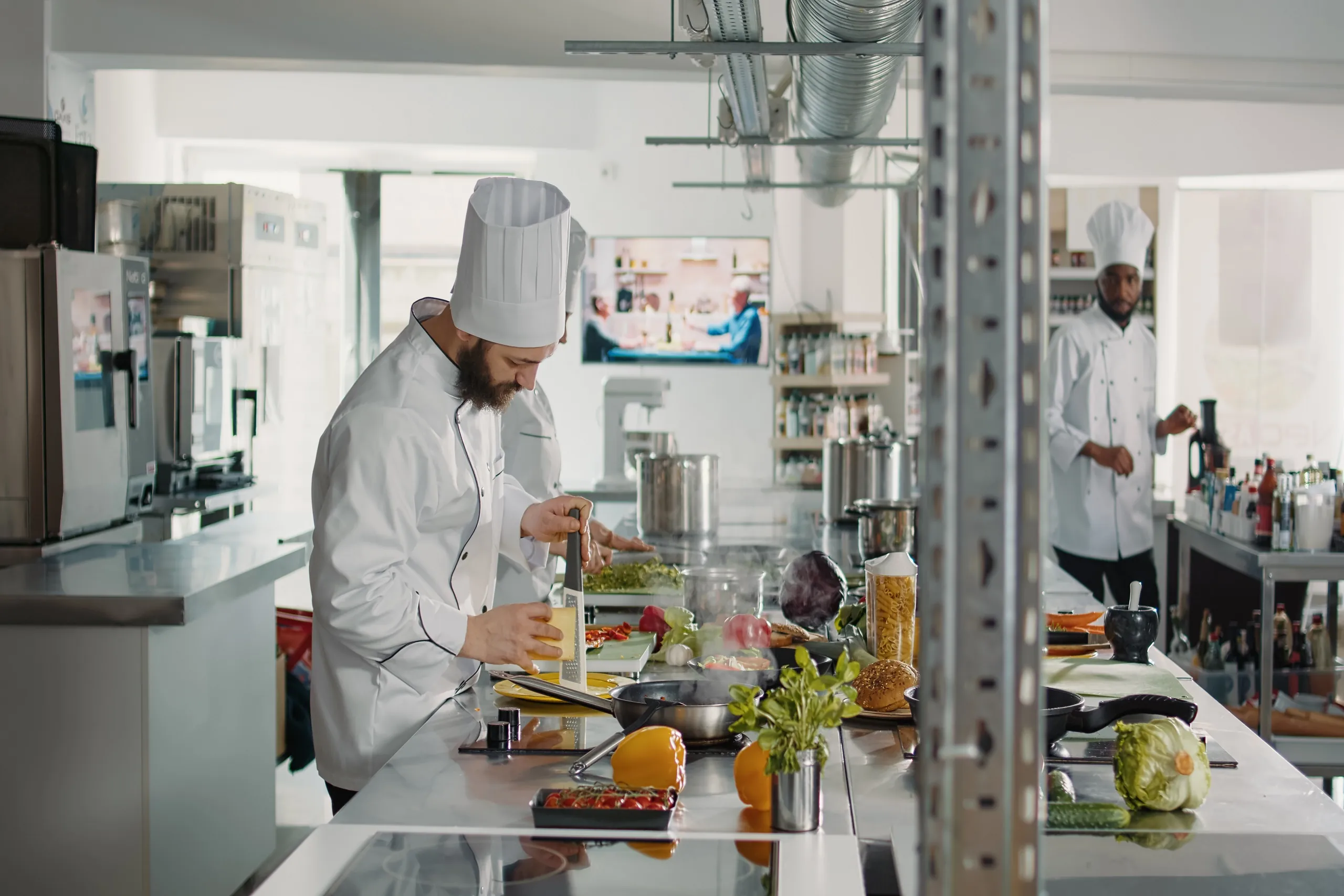
Traditional kitchens are designed with fixed installations that feel rigid and difficult to scale when the restaurant menus expand or shift their service models. Modern restaurants need flexible commercial kitchen equipment that supports safe, organized, and flexible food preparation needs, especially during the heavy operational hours.
According to Market Growth Reports, the commercial kitchen equipment market is expected to reach USD 11692.42 million by 2026 and USD 20356.71 million by 2035, thus highlighting its consistent increase in demand across restaurants, hotels, institutional canteens, etc.
In terms of installations, most restaurant owners today prefer to install modular kitchen equipment by partnering with a commercial kitchen equipment manufacturer, which can help in designing module kitchen layouts customized to their operational requirements. This blog will help you know about modular kitchen equipment in detail and how to install it correctly according to your restaurant workflows, safety, and compliance.
Modular kitchen equipment can be defined as a complete system of standardized kitchen units that can be customized, reconfigured, assembled, or disassembled, as required by the kitchen’s operational needs.
Here are some of the most common modular kitchen components:
All the components in a modular kitchen equipment can be organized in a manner such that it suits the unique workflows of the kitchen, most importantly during the peak kitchen hours.
Before you start purchasing modular kitchen equipment, it is important to understand the workflows in your restaurant kitchen.
For example:
Thus, analyzing the workflows according to the staff movement patterns, preparation time, and safety concerns is crucial.
Let’s understand a scenario:
Imagine a kitchen restaurant that is designed with poor space optimization and inefficient layout. Such that:
Thus, you can say that in some way, lack of space optimization and inefficient layout planning is resulting in a decrease in the customer count and ultimately the revenue.
In simple words, most commercial kitchen equipment in India often operates in limited spaces. Thus, modular equipment should be placed such that it maximizes space utilization, simplifies workflows with a well-designed layout, resulting in increased customer service and enhanced revenue.
Modular kitchen equipments are designed to boost compatibility and integration with other units. It will include units that consist of gas, electrical, and plumbing connections. The aim is to make different kitchen units function together without the need to disrupt the overall kitchen layout.
This helps in simplifying the integration between different devices:
Many experienced commercial kitchen equipment manufacturers also ensure that the modular kitchen systems are designed to adapt to future appliance requirements, kitchen capacity, and modules, without any major reconstruction required.
No two restaurant kitchen requirements are the same. A bakery kitchen may require equipment like baking preparation tables, deck ovens, dough makers, etc. Whereas a barbecue quick-service restaurant may require a grilling station, a deep fryer, dish assembly counters, etc.
That’s the reason why most modular commercial kitchen equipment allows customizations to address the specific kitchen requirements of the restaurants.
Customizations in modern kitchen restaurants can be done, according to the:
Such customizations allow modular kitchens in restaurants to expand their menu and services easily.
The graph below depicts the energy usage in commercial kitchen restaurants:
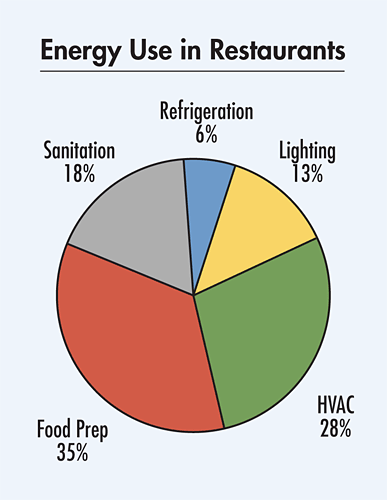
From the graph, it is evident that the maximum energy consumption in the commercial kitchen restaurant is made during the food preparation process (35%). To address this, modular kitchens are designed with equipment that support energy efficient appliances and advanced ventilation systems. This helps in achieving:
Many modular kitchens also integrate smart tracking and monitoring systems that continuously track the appliance performance and energy consumption. According to research, smart kitchens (Kitchens designed with intelligent appliances with smart sensors and connected modules) can reach 90-95% energy efficiency.
Instead of keeping separate appliances for each function, most modular kitchens prefer keeping appliances that can perform multiple activities.
For examples:
Using multi-functionality appliances in the modular kitchen can reduce the overall kitchen design as well as preparation time.
Ensuring safety and compliance with the regulated standards, such as FSSAI, fire safety, and local health regulations, is essential in commercial kitchens or restaurants in India.
The following table highlights some of the most common hazards that might take place in the commercial kitchens:
| Commercial Kitchen Hazard | Cause |
|---|---|
| Heat injuries or burns | Cooking appliances such as grills, fryers, etc operate at high temperatures |
| A fire accident | Gas leakage or faulty electrical connections in the kitchen |
| Electrical shock | Inefficient wiring or usage of any damaged electrical appliance |
| Food poisoning due to contaminated food served to the customers | Poor cleaning, refrigeration, and food storage |
Here are some preventive measures that modular kitchens with commercial kitchen equipment adopt to avoid major commercial kitchen hazards:
Several modular kitchens are also designed with slip-resistant flooring and an efficient slope-to-drain to maintain safety and hygiene.
With traditional restaurant kitchens, maintenance is a big challenge, as every unit is fixed. But modular kitchens offer easy maintenance and accessibility as each unit can be easily disassembled, cleaned, and assembled again.
Easy maintenance and accessibility in modular kitchens in restaurants support:
As most of the kitchen units can be maintained, cleaned, and organized easily, the restaurant can perform maintenance activities frequently, thus ensuring each unit functions properly at all times.
Food is the main identity of a restaurant, but how the food is prepared by using different appliances in the kitchen is also an integral part of how the food will taste and look.
For example, if your restaurant staff does not know how to use the oven for warming, then there is a high chance that the food may get burned if the mode is switched to grill or shifted to extremely high temperatures, or it will remain cold and served as it is.
That’s why restaurants that use modular kitchens must train their staff regarding:
With efficient staff training, restaurants can observe faster food preparation and fewer operational mistakes or hazards.
Commercial kitchen equipment might be expensive, and most restaurant owners analyze these equipements only on the basis of price. Understand this, that it is not necessary that cheap equipment will function efficiently according to your kitchen requirements. Therefore, analyze the commercial kitchen equipment on the basis of:
Price is an important criterion, but the equipment’s usefulness, performance, and long-term maintenance are equally critical for modular kitchens in restaurants.
Modular kitchens are a practical solution to the modern kitchen requirements of Indian restaurants. From properly designed layouts, efficient space utilization, and complete kitchen appliances, storage units, and safety and compliance integration, the modular kitchens with commercial kitchen equipment are customized to restaurant workflows, design, and functionality.
Looking for a partner to revamp your existing restaurant kitchen with commercial kitchen equipment and a complete modular kitchen setup? Riddhi Display is a trusted commercial kitchen equipment manufacturer. We can help you setup your modular kitchen according to your restaurant’s needs.
1. What is modular commercial kitchen equipment?
A modular commercial kitchen equipment is a set of standardized kitchen units that can be assembled and disassembled according to kitchen requirements.
2. Are modular kitchens for restaurants expensive?
Modular kitchens for restaurants might require an initial upfront investment, but they can reduce the overall operational costs and energy requirements, while ensuring safety and compliance.
3. Why is a modular kitchen important in restaurants?
A modular kitchen can be installed quickly, can be customized to unique restaurant workflows and requirements, and provides easy maintenance as compared to traditional restaurant kitchens.

Copyright by Riddhi Display. All rights reserved.
Powered by: Icecube Digital