Have a question? Call us Now
+91 9825072799
Most restaurant owners ask this question at the wrong time. They ask for it after the interior is done, the budget is mostly spent, and the counter is the last thing on the list.
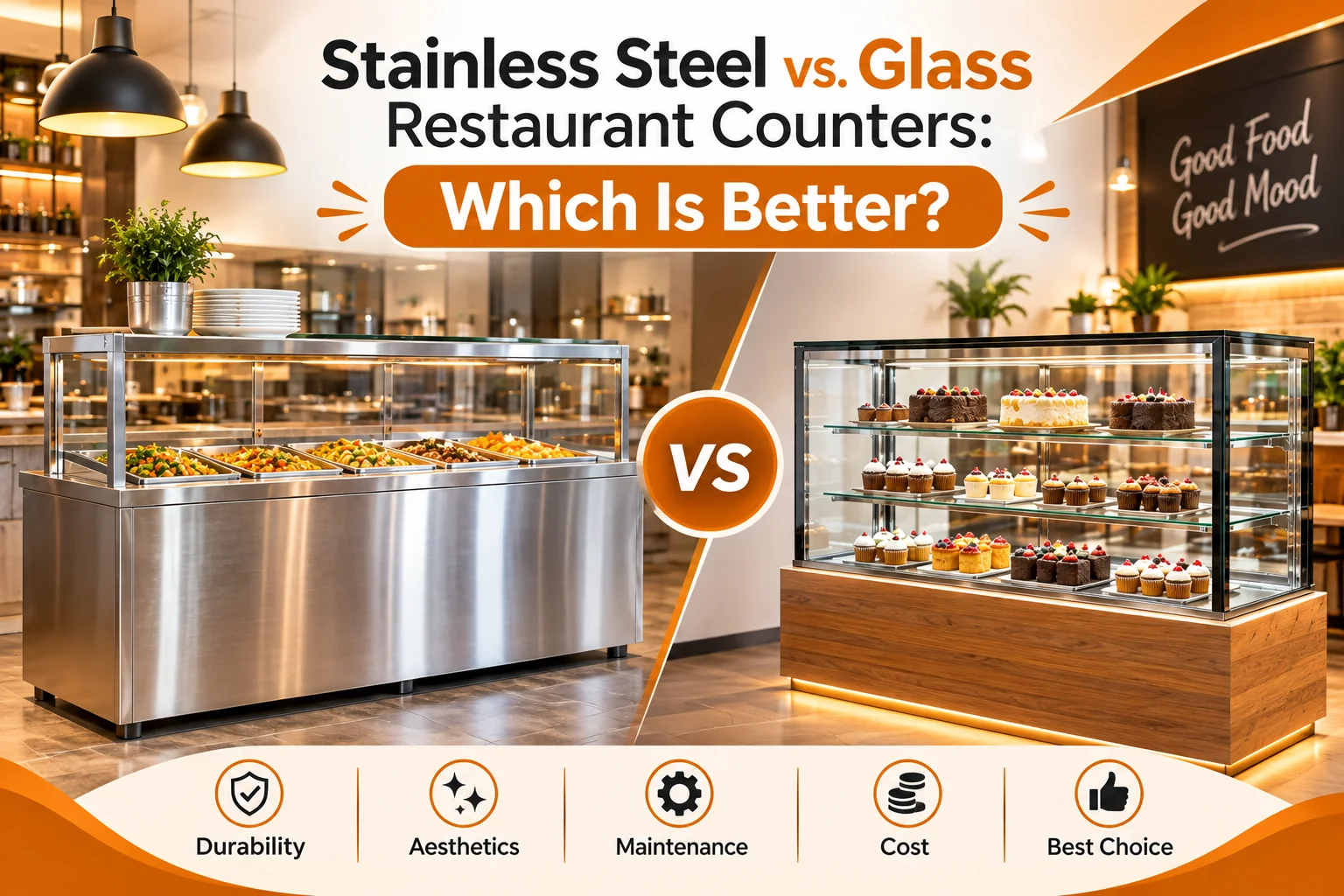
Here is the short answer. Neither material wins on its own. Stainless steel is better for the body of the counter, and glass is better for the part customers look at. The best restaurant display counter usually uses both, and your job is to get the balance right for your menu, your space and your daily rush.
This guide breaks down how each material performs in a real restaurant, so you can choose without guessing.
A stainless steel counter is a solid, metal-bodied unit. It works best for prep, storage, serving lines and any spot where food needs to stay out of customer view. A glass counter has transparent panels so customers can see the food inside, and it is built mainly for selling.
In practice, the two are not rivals. A typical restaurant food display counter has a stainless steel frame, base and working surfaces, with tempered glass on the front and sides. The steel handles the wear and tear, while the glass handles the sales. So when people say “steel versus glass,” they usually mean “how much of each do I need?”
Stainless steel is more durable. It resists dents, rust and daily knocks from trays, trolleys and cleaning equipment. A steel counter that is properly cared for can run for many years in a busy kitchen or serving area.
Glass is tougher than most people expect when it is tempered, but it will always be the more delicate material. Hard hits from a heavy tray or a careless mop can chip or crack it, and replacing a large panel costs more than repairing a steel surface.
Which part of the counter takes the most punishment? The lower half. Staff bump into it, carts scrape along it and cleaning chemicals pool near the floor. That is why steel belongs there, and glass goes higher up, away from the daily collisions.
Both can be kept very clean, but they need different habits.
Stainless steel has a smooth, non-porous surface, so germs and food residue have little to cling to. It handles strong sanitiser well and dries quickly. The one complaint is fingerprints and water marks, which show up easily on a polished finish. A brushed finish hides them better.
Glass is also easy to wipe, and it never absorbs odours or stains. The weak spot is the joins. Where glass meets the frame, crumbs and moisture can collect if the design is sloppy. Look for counters with tight, sealed joints and sliding doors that lift out for cleaning.
For hot food counters, stainless steel is the safer choice for any surface that touches heat, since it handles high temperatures without warping or discolouring.
Glass, without question. Customers decide what they want in a few seconds, and they can only choose what they can see. A well-lit glass front turns your food into the advertisement.
Steel gives you no visibility at all, which is perfect for storage and prep but poor for selling. If a customer cannot see the dish, you lose the impulse sale.
Lighting makes a real difference here. LED strips inside the glass section show off colour and texture without heating the food. A restaurant counter with good glass and warm lighting can sell more on its own than a bigger menu board.
| Feature | Stainless Steel | Glass |
|---|---|---|
| Durability | Very high, resists dents and rust | Moderate, can chip or crack under impact |
| Food visibility | None | Excellent |
| Hygiene | Easy to sanitise, non-porous | Easy to wipe, but joints need attention |
| Heat handling | Handles hot surfaces well | Not suited to direct heat |
| Cleaning look | Shows fingerprints on polished finishes | Shows smudges and streaks |
| Weight | Heavier | Lighter panels, but frame adds weight |
| Repair cost | Lower, surface repairs are common | Higher, panels often need replacing |
| Best use | Bases, prep areas, hot counters, storage | Fronts, showcases, cold display |
| Customer appeal | Clean and professional | Attractive and inviting |
For most restaurants, yes. A hybrid counter puts stainless steel where the wear happens and glass where the selling happens. You get the toughness of steel and the visibility of glass in one unit.
This is the style most restaurant counters suppliers recommend, and for good reason. It costs less to maintain than an all-glass unit, looks more inviting than an all-steel one, and gives you the flexibility to add refrigeration, heating or ambient display depending on what you serve.
Our range of fast food display counters follows this same idea, with sturdy steel construction and glass windows that show off the menu.
Match the material to what you actually serve and how you serve it.
Quick-service and fast food outlets. Go hybrid with sliding glass and a steel base. Staff open and close the doors constantly, so strong hardware matters more than looks.
Cafés and dessert counters. Lean towards more glass. Cakes, pastries and cold desserts sell on appearance, so visibility is the priority. A refrigerated unit with glass on three sides works well here. You can see the options in our refrigerated display counters.
Full-service restaurants with a buffet. Choose steel-heavy counters with glass sneeze guards. Hot food needs sturdy, heat-friendly surfaces, and guards protect food while keeping it visible.
Cloud kitchens and takeaways. Mostly steel. Customers rarely see the counter, so durability and easy cleaning matter far more than appearance.
Sweet shops and snack counters. Glass-forward designs with steel bases, since customers browse and choose by sight.
It depends on what is inside. Refrigerated counters for desserts, salads and cold items should stay between 2°C and 8°C to keep food fresh and safe. Heated counters for cooked dishes should stay above 60°C so the food stays warm and hygienic.
Steel and glass both affect how well a counter holds its temperature. Single glass loses cold faster than double glass, and cheap steel without proper insulation lets heat leak in. If you serve a lot of perishable food, ask about double-glazed glass and insulated bodies. They cost a little more at the start and save on power and spoiled stock later.
Stainless steel usually costs more per panel than plain glass, but the full picture is more balanced. Steel lasts longer and needs fewer repairs, while glass is cheaper to buy but costlier to replace when it breaks.
The final price of any restaurant display counter depends on size, glass quality, insulation, refrigeration, lighting and finish rather than material alone. Rather than guessing, check the display counter pricing guide to get a sense of typical ranges before you ask for quotes.
A good supplier will answer these without hesitation.
If you are fitting out the whole space, it helps to look at restaurant kitchen equipment at the same time, so your counters, prep areas and storage all work together.
Stainless steel keeps your counter strong, clean and ready for years of heavy use. Glass makes your food look good enough to order. Rather than choosing one over the other, decide how much of each your restaurant needs, based on what you sell and how your customers shop.
If you want help working that out, you can browse our full range of restaurant display counters or ask for a free quote on a unit made for your space.
1. Is stainless steel or glass better for a restaurant display counter?
Neither is better on its own. Stainless steel is better for durability and hygiene, and glass is better for showing food. Most restaurants get the best results from a hybrid counter that uses both.
2. Which material is easier to clean?
Both clean easily. Steel handles strong sanitiser and resists stains, while glass wipes clear quickly but needs attention at the joints. Brushed steel hides fingerprints better than polished steel.
3. Can restaurant display counters be customised?
Yes. Size, design, glass type, lighting and materials can usually be tailored to your layout, menu and branding.
4. What is the ideal temperature for a restaurant display counter?
Refrigerated counters should stay between 2°C and 8°C, and heated counters should stay above 60°C.
5. What is a hybrid display counter?
It combines a stainless steel body with glass windows, giving you strong construction and clear product visibility in one unit.
Copyright by Riddhi Display. All rights reserved.
Powered by: Icecube Digital