Have a question? Call us Now
+91 9825072799
Operating a restaurant or hotel comes with a lot of time and effort, one of these includes, Dishwashing and pot washing. There is a high level of work happening in the kitchen during service hours, which means the plates, glasses, food preparation items, large pots, and other small tools and equipment need to be washed and kept ready for the next shift.
It is important to note that commercial kitchens tend to have different equipment for different jobs, with cook and plate washing appliances being the best for glasses, cups, plates, and cutlery, and larger equipment best for the heavier cooking utensils. Knowing what is out there allows companies to adapt to the number of plates they need to wash each day and kitchen size.
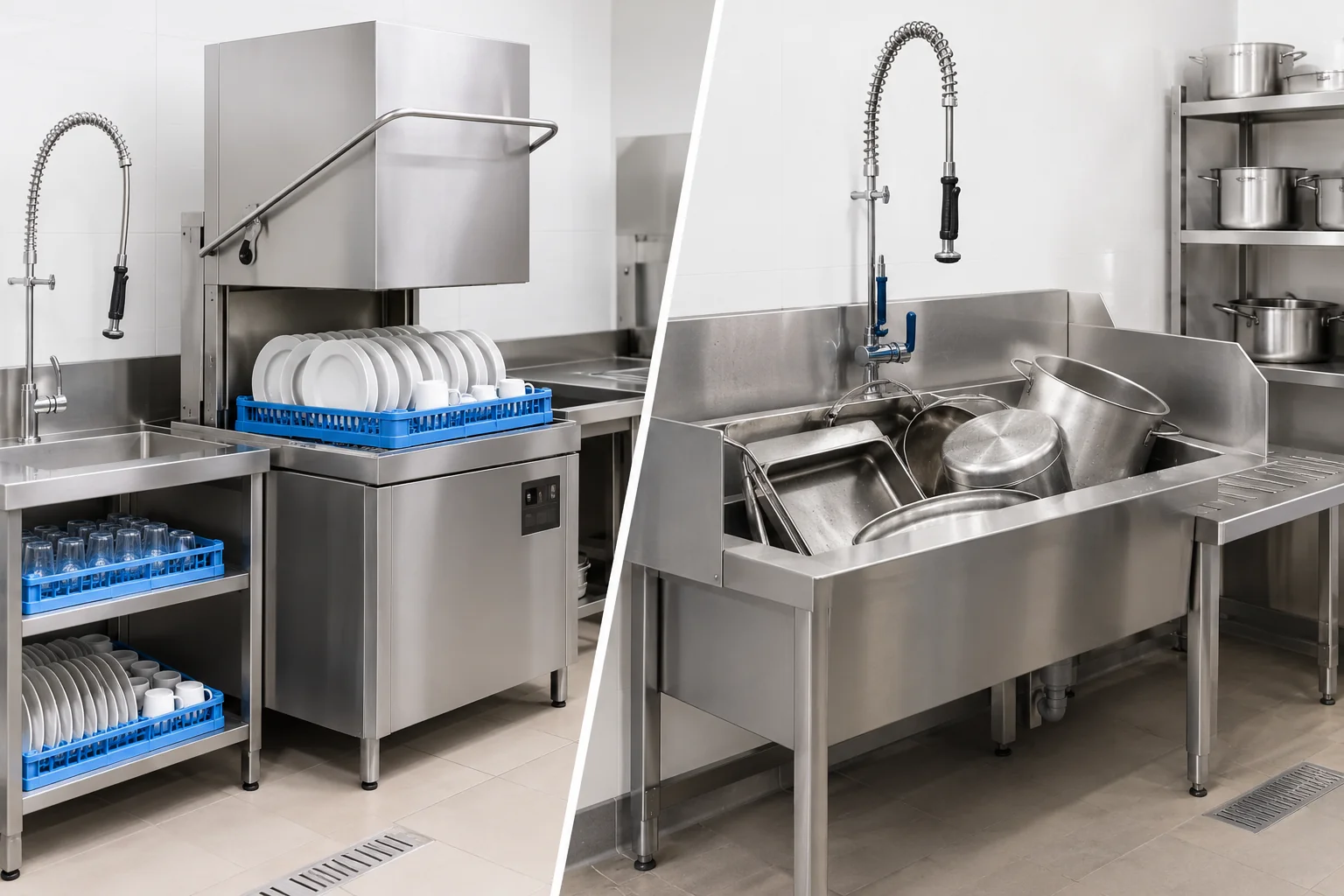
Dish Wash and Pot Wash Equipment is commercial equipment that is used for washing dishes, utensils, cookware, and food preparation containers. They are also applicable to washing all types of cooking utensils and serve as supporting items.
Dish wash equipment consists of restaurant dish washing machines, pre- rinse set ups, sinks, drying and draining areas. Pot Wash Equipment Pot wash equipment might consist of deep washing sinks, spray faucets, pre- rinse stations and other suitable washing facilities for large cooking vessels.
Either piece of equipment can be installed in either separated or joined washing areas within your restaurant or hotel. Installation will be determined by the number of meals you serve, the type of cookware used, space available, and cleaning system.
What type of dish wash equipment you need would depend on the number of dishes you produce during each service and how automated you need it to be.
Commercial dishwashing machines clean plates, bowls, cups, glasses, cutlery. They come in a range of models to suit restaurants, cafes, hotels and canteens.
When buying a machine, reflect upon rack capacity, wash cycle time, water use, services supplied and manufacturer’s cleaning and maintenance instructions.
Pre-rinse units assist in clearing residual food particles and loose dirt from utensils and dishes when no dish-washer is involved. They include a spray faucet and the appropriate sink or work area.
A correctly set up pre rinse unit can help to create a more organized operation and minimize the amount of food that goes into the washing phase.
Commercial dish washing sinks These sinks are suited for the manual washing, rinsing and handling of your dishes. Single or multi-bowl options are available, according to your business needs.
The size of the sink must be appropriate for the dishes that are being washed as well as leaving room for staff to work around.
Drainboards are for draining dishes after they have been washed and rinsed. Separate areas for drying and storing items will help to prevent a clean utensil from being placed in with dirty dishes and kept there longer than necessary.
These areas’ size and location should correspond with the volume of kitchen dishwasher activity and the available floor space.
Pot washing needs larger and deeper sink washing equipment to fit such utensils as pots and pans which are heavier and bulkier than typical dishes. Proper provision of equipment allows staff to wash cooking vessels more conveniently and have a tidy washing area.
What is a pot wash sink? Made to wash large pots, pans, food-prep buckets, stockpots and cooking vessels, a commercial pot wash sink is a deep utility sink with deep bowls and ample space so you can do the work more easily and more quickly.
Prior to choosing a pot wash sink, consider: the utensil size, the space available for installing the sink, requirements for drainage, and the number of employees working in the wash-up area.
Pre-rinse spray stations cleanse off food pieces, sauces and loose soil from cookware items prior to hand cleaning. They are most beneficial in a commercial kitchen utilizing significant food every day or one that presents a lot of cooking vessels.
The spray unit should suit the sink, water supply and purpose of use.
Multi-bowl sinks are convenient for the various phases of manual cleaning. As per the cleaning process, each bowl may be designated for washing, rinsing, and other cleaning procedures.
The quantity and dimensions of the bowls should take into consideration the washing up equipment, workload, cleanliness standards and available space.
The pot washing zone should be well designed with a deep sink, pre rinse faucet, draining surface, waste port, and storage close at hand for cleaned items.
Keeping these in a workable position can cut down on unnecessary movement and enable your workers to more easily work with the heaviest utensils.
Although both categories support kitchen hygiene, they serve different cleaning requirements.
| Feature | Dish Wash Equipment | Pot Wash Equipment |
|---|---|---|
| Main Purpose | Cleaning plates, cups, glasses, and cutlery | Cleaning large pots, pans, and cooking vessels |
| Common Equipment | Dishwashing machines, dish sinks, pre-rinse units | Deep pot wash sinks, spray stations, multi-bowl sinks |
| Main Consideration | Dish volume and washing cycle requirements | Utensil dimensions, weight, and sink depth |
| Space Planning | Rack handling, loading, unloading, and drying space | Large sink bowls, draining space, and staff movement |
| Selection Factor | Capacity, cycle time, and utility requirements | Bowl size, water access, drainage, and ease of handling |
Some kitchens may use equipment from both categories within one washing section. However, the layout should keep dirty utensils separate from cleaned items and support the kitchen’s food safety procedures.
Before purchasing equipment, assess the kitchen’s actual cleaning needs rather than selecting products based only on price or appearance.
Determine the numbers of plates, glasses, knives, forks and food containers that will need to be washed during the busiest times of the working day. A restaurant that caters for a few people will have different needs to a hotel, large canteen or a banquet kitchen.
Prepare in advance Before you begin working, check you have the largest, deepest pots, pans, trays and containers that are manageable, for all elements you will need to wash in your working day.
Ensure there is enough space to stack soiled ware for collection and removal of any caked on debris, wash, rinse, drain and promote the transfer of clean ware to the store. Do not arrange soiled and clean ware where they will cross paths.
Verify the water supply, drain connections, electrical supply for powered equipment and other installation requirements. Adhere to the manufacturer’s guidelines, and hire qualified workers if required.
Ensure that business washing equipment can be used repeatedly in a wet working environment. When buying, check the grade of material, surface finish, joints, construction quality and cleaning instructions.
Ensure equipment can be cleaned and maintained by the staff according to the manufacturers’ instructions. Verify that service support, replacement parts, and maintenance instructions are available, especially for powered dish washing machines.
Measurement Equipment should be compared with regards to capacity, durability, ease of installation, running costs and appropriateness of daily use. An item of equipment that costs less when purchased may not necessarily be the better buy in the long run if it is not able to cope with the demands placed on it in the kitchen.
When planning a commercial washing area, avoid these common mistakes:
Planning of the washing area is important to ensure that it is ergonomically designed for staff to use and offers the ability to cope with the needs of a busy kitchen.
In commercial kitchens, it is just as important to have the right dish wash and pot wash equipment. They will help provide an organized, tidy, and efficient operation that is ready for the busy day ahead. As dish wash equipment is designed for items like plates, cups, and cutlery, the pot wash equipment is designed for things like larger pots, pans, and trays.
Riddhi Display offers kitchen equipment for commercial kitchens. When choosing a washing system, consider the flow of cleaning in your kitchen to ensure that you purchase the correct equipment to meet the needs of your business.
Let’s discuss your commercial kitchen equipment requirements.
What is the difference between dish wash and pot wash equipment?
Dish wash equipment is mainly used for plates, cups, glasses, and cutlery, while pot wash equipment is designed for larger cooking vessels, pots, and pans.
What equipment is used for commercial pot washing?
Common options include commercial pot wash sinks, pre-rinse spray stations, multi-bowl sinks, and suitable draining areas.
How do I choose a commercial pot wash sink?
Consider the dimensions of your largest utensils, sink depth, available space, drainage, water supply, and daily washing volume.
Is a commercial dishwasher necessary for every restaurant?
Not necessarily. The decision depends on dish volume, staffing, service requirements, available space, and the business’s operating budget.
How can a commercial kitchen improve its dishwashing workflow?
Separate dirty and clean items, provide adequate washing and draining space, select suitable equipment, and establish consistent cleaning procedures.
Copyright by Riddhi Display. All rights reserved.
Powered by: Icecube Digital