Have a question? Call us Now
+91 9825072799
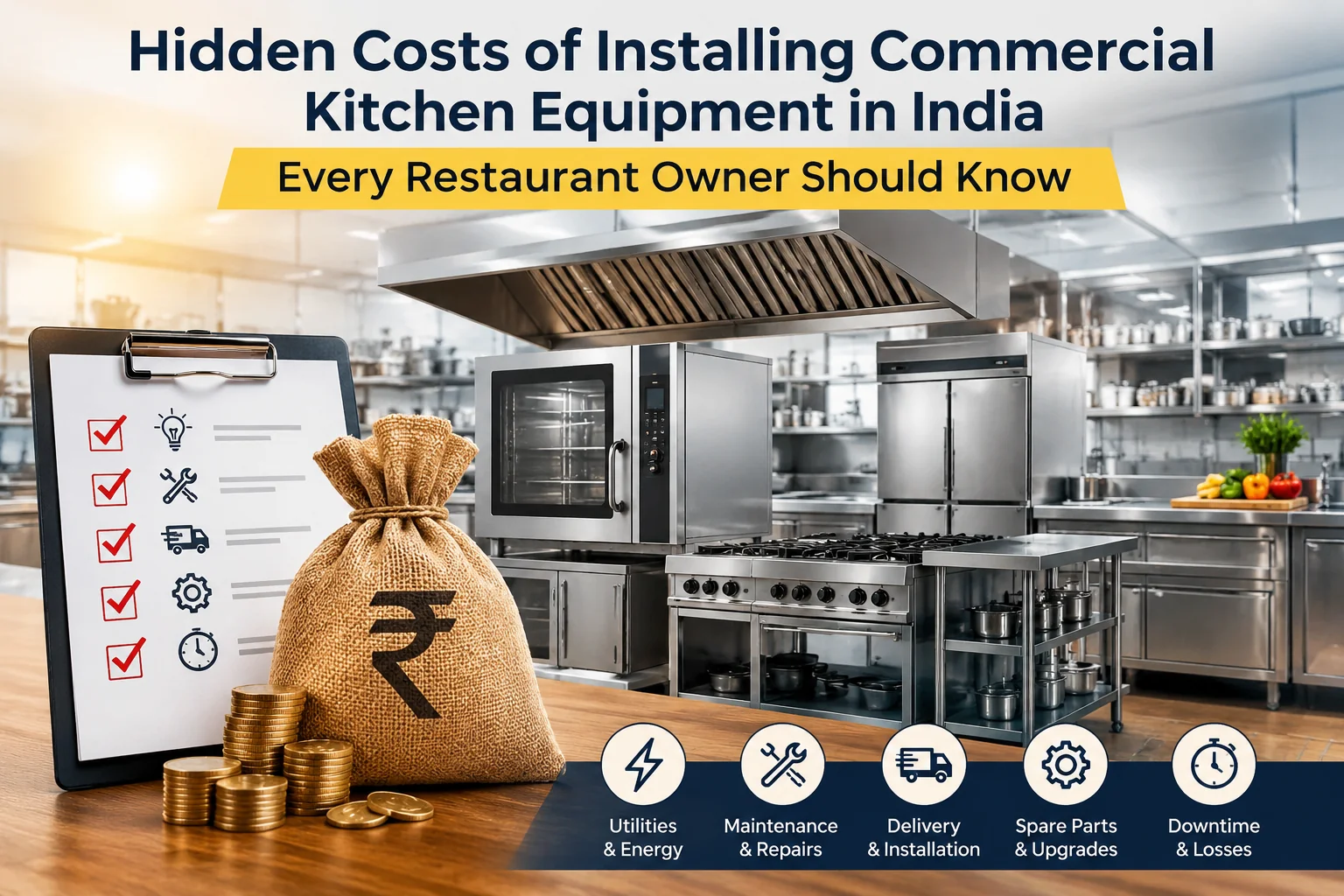
Many restaurant, café, hotel, cloud kitchen or catering company owners take weeks to compare the cost of commercial kitchen equipment when they’re planning a new restaurant. They haggle with vendors, read about brands and value for money and pay attention to getting the best deal. But for many, it turns out that buying the equipment is just half the cost. The tough part starts while installing, as unexpected costs are bound to make the project over-budget.
There are a number of hidden costs that typically will not be considered at the outset of such a project including electrical upgrades, gas pipeline installation, ventilation systems, plumbing changes, transportation and other continuing maintenance needs. Unforeseen added costs are not just a cost of the original investment, but can also be a delay to opening your restaurant.
By being aware of these upfront expenses before you buy your commercial kitchen equipment, restaurant owners can develop a realistic budget, prevent needless delays, and construct a commercial kitchen that will run efficiently for many years.
The most common mistake that new restaurant owners make is thinking that the quote they are offered from a kitchen equipment company is the total price of the project. Typically, the quotation only includes the equipment, not its installation. There are some supportive systems that need to be installed together to operate a fully functional commercial kitchen, and all of them are necessary for safety, efficiency and compliance with local regulations.
For instance, a commercial cooking range may not be just installed in the kitchen and linked to a pre-existing gas cylinder. It demands an adequate pipeline design, pressure regulators, safety valves, and adequate clearance and ventilation. Likewise, a business fridge might necessitate particular electrical wiring that can cope with continuous electricity use. Supporting requirements can be substantial and are frequently a large share of the overall project cost and therefore must be planned early in the project.
Commercial kitchens use significantly more power than average homes or offices. Continuous power is needed for equipment like combo ovens, refrigeration systems, dishwashers, bakery ovens and exhaust blowers. In most situations, the existing electrical systems are not capable of supporting these loads.
Owning a restaurant often requires some upgrades to the wiring, the addition of a three-phase power connection, the installation of new electrical panels and the expansion of circuit breaker capacity before the equipment can even be turned on. These enhancements could be viewed as an extra cost but they are necessary to safeguard costly equipment from voltage fluctuations and to avoid electrical failures during peak operating hours. Failure to meet these criteria may lead to regular breakdowns, increased repair expenses and even safety risks that cause downtime.
The majority of restaurant operators do not realize just how critical it is to have an appropriate design until the kitchen is too hot, smoky and uncomfortable. All commercial kitchens generate, emit and release heat, grease, steam and cooking fumes, which need to be efficiently removed to ensure a safe working environment.
Exhaust hoods, ducting, blowers, grease filters and fresh air systems can drastically boost the project costs but are vital to the improvements of employee comfort, food quality and can help prevent grease build-up on kitchen equipment. Also, a well-ventilated kitchen doesn’t require as much maintenance and will make expensive appliances last longer, making it a worthwhile investment in the long run rather than an expense.
Many Indian restaurants still use gas from cooking equipment as it is efficient and can cook quickly. The installation of commercial gas systems is, however, much more than just the installation of an LPG cylinder.
Pressure regulators, emergency shut-off valves, leak detection systems, and correctly sized pipelines to adhere to safety guidelines are part of professional gas pipeline installation. Lower quality materials or installation by unqualified installers will result in hazardous situations and can cause costly repairs or be a problem for regulatory compliance later on. A professionally designed gas system can ensure a smooth operation in the kitchen and safeguard the employees and the customers.
When planning a restaurant, water supply and drainage are not always a priority but can have a direct impact on kitchen efficiency and hygiene. Reliable plumbing systems are essential parts of commercial dishwashers, ice machines, preparation sinks and steam equipment.
Drainage can be a problem if it is not designed properly, leading to safety hazards and delays in normal activities. Cost of retrofitting plumbing after equipment installation is much higher than if the plumbing had been designed in the first place. With careful planning at the outset, construction is avoided, and maintenance costs in the future are reduced.
One of the most frequent errors restaurant owners make is buying equipment before determining the kitchen design. If the equipment is not installed properly, walls may need to be cut, counters must be remodeled or utility services must be rerouted. These changes are not only more expensive to construct, but also take longer to build as well.
A commercial kitchen designed with professional style will be focused largely on the workflow and make sure that the areas of the food preparation, cooking, washing and storing the food is arranged in the most efficient way possible. This will not only save money on installation, but also enhance the productivity of staff after the restaurant opens.
There are some particular cases of heavy commercial refrigerator, display counter, bakery equipment and cooking ranges that need special transportation and handling. Depending on equipment size and/or restaurant location, there may be extra fees for loading, unloading, lifting and placing the equipment inside the restaurant kitchen.
Many suppliers also have separate costs for installation and commissioning. This process involves the setup of the equipment, installation of utilities, equipment testing, equipment calibration, and equipment testing to make sure everything is working before operations. The costs are agreed in advance to avoid any unforeseen extras on the bill.
Buying something for a lower price doesn’t always result in lower total costs. The purchase of cheap commercial kitchen equipment uses more electric power, has more frequent broken down rate, and limited spare parts. These running costs can add up over several years and outweigh the savings that were accrued when the product was bought.
There may be a higher initial cost for energy efficient equipment, but it saves on electricity and gas usage, maintenance costs, and consistent performance. When looking at equipment, restaurant owners need to take into account not just the price, but the total cost of ownership.
The best commercial kitchen equipment suppliers are more than just sellers. They design and plan efficient layout of restaurants kitchens, advise restaurant owners on appropriate restaurant equipment, identify utility requirements, oversee restaurant equipment installation and offer post-sales services.
With an experienced supplier, risk of future unforeseen costs is minimised as potential issues are identified prior to installation. It also ensures that the kitchen meets safety standards and provides the greatest levels of operational efficiency.
The installation of commercial kitchen equipment is so much more than just buying equipment. The total investment also includes electrical upgrading, plumbing, ventilation, gas pipelines, transportation, installation, maintenance and compliance costs. When restaurant owners are only considering equipment costs, they can be caught off guard when it comes time to install the equipment.
Be aware of these hidden costs beforehand and work with a reliable commercial kitchen equipment supplier, Riddhi Display, to prevent unwanted costs and problems from arising, do your project on time and create a commercial kitchen that will help your business thrive for years to come. A well-thought-out installation can be more than a cost. It’s an investment in your restaurant’s efficiency, safety and profitability.
1. What are the hidden costs of commercial kitchen equipment?
Hidden costs can include installation, transportation, electrical work, plumbing, gas lines, and ventilation. Planning these costs in advance helps avoid unexpected expenses.
2. Why is ventilation important in a commercial kitchen?
Commercial kitchen ventilation removes heat, smoke, grease, and cooking fumes. It helps maintain better air quality and a safer working environment.
3. Does commercial kitchen equipment need special electrical connections?
Some commercial kitchen equipment requires dedicated circuits, upgraded wiring, or three-phase power. Requirements vary based on the equipment type, size, and power capacity.
4. How can I reduce commercial kitchen equipment installation costs?
Plan your kitchen layout, equipment placement, and utility requirements before installation. This can help reduce extra work, delays, and installation expenses.
5. Why choose a professional commercial kitchen equipment supplier?
A professional supplier can help with equipment selection, kitchen layout, installation, and utilities. This makes the commercial kitchen setup more efficient and reliable.
Copyright by Riddhi Display. All rights reserved.
Powered by: Icecube Digital